A customer emails a photograph. The leather still looks new. But the chain strap has gone green at the links, and the zip pull has a dull, cloudy film where her hand rests. She wants a refund.
For a brand, this is one of the most expensive emails there is. The bag was made well. The leather was chosen carefully. And it is being returned because of a component that cost a fraction of the retail price.
Hardware failure — tarnishing, discolouration, snapped clasps — is one of the leading causes of returns in leather goods. And the green discolouration in particular is almost always traceable to a single decision made months earlier, at the sourcing stage.
The green is copper. It is not a plating defect.
The green film has a name: verdigris. It is what happens when copper reacts with moisture, salt, sweat and the acids in cosmetics and perfume.
Most handbag hardware on the market is made of brass or a copper-based alloy, then plated gold. Brass is roughly two-thirds copper. Plating covers it, but plating is a layer, and layers wear. At the points where a bag is touched most — the clasp, the zip pull, the chain links that rub against each other — the plating thins first. Once the copper underneath is exposed to air and skin, the reaction begins.
This is why brands are often frustrated when they investigate. They ask the plating house to improve the finish. They increase the micron thickness. They add lacquer. All of this helps, and all of it delays the problem rather than removing it. The plating was never the cause. The base metal was.
What each base metal actually does over time
| Base metal | Contains copper? | What happens with wear |
|---|---|---|
| Brass | Yes (~60–70%) | Once plating wears through, copper oxidises. Green verdigris and dark patina. Warm tone and weight are genuinely beautiful — but patina is inherent, not a defect. |
| Zinc alloy (Zamak) | No | Will not turn green, but has no corrosion resistance of its own. It depends entirely on its plating. Where plating fails, the zinc beneath dulls and can pit. |
| 316L stainless steel | No | Chromium forms a passive oxide layer that repairs itself when scratched. No copper, so verdigris is chemically impossible. A scratch stays a scratch; it does not become corrosion. |
That last row is the point of this article. Stainless steel does not resist tarnishing because it has a better coating. It resists tarnishing because there is nothing in it to tarnish.
“But we use gold hardware.”
So do brands that use stainless steel. The colour and the substrate are two separate decisions, and it is worth separating them.
Gold-toned hardware can be produced on a stainless steel base using PVD — a vacuum coating that bonds at the molecular level rather than sitting on the surface as a plating layer does. Under normal use it holds its colour for over five years. It can be specified in 18K and 24K gold tones, in mirror, satin or vintage finishes.
The difference is what happens underneath when the surface eventually wears. On plated brass, wear exposes copper — and copper turns green. On PVD-coated stainless steel, wear exposes stainless steel. It stays silver. It does not spread. It does not stain the leather around it.
What to ask a hardware supplier
- What is the base metal, precisely? Not “metal alloy” or “gold hardware” — the actual substrate. If the answer is vague, assume it is plated zinc.
- If plated: what micron thickness, and rack or barrel plating? Barrel plating tumbles parts together and coats unevenly; it is a common cause of early tarnishing on visible components.
- What are the salt-spray results? Ask for hours, not adjectives.
- What is the nickel release figure? For anything that touches skin — chain straps, zip pulls, clasps — this is an EU compliance question, not an optional extra.
When brass is still the right answer
It would be dishonest to write this article as though stainless steel wins every time.
Brass has a warmth and a density that stainless steel does not have, and for heritage brands the patina is the point — it is the visible record of a bag being used and loved. If your brand story is built on ageing gracefully, brass is not a compromise. It is the material.
Zinc alloy, likewise, does things stainless steel cannot. Its low melting point captures fine sculptural detail and deep logo relief that would be uneconomical to machine in steel, and it costs considerably less. For decorative components, seasonal collections and intricate 3D shapes, it is often the correct engineering choice.
The mistake is not choosing brass or zinc. The mistake is choosing them without knowing what they will look like in three years, and then being surprised.
A practical way to decide
Most brands we work with do not use one material for everything. They split the bill of materials:
- 316L stainless steel for high-contact and structural parts — chain straps, clasps, zip pulls, D-rings, anything that touches skin or bears load.
- Zinc alloy for decorative, sculptural and seasonal pieces where detail matters more than a ten-year life.
- Brass where the patina is a deliberate part of the design language.
Specify the material per component, not per collection. It is a more precise conversation with your supplier, and it produces a more honest quotation.
The cost argument, honestly stated
Stainless steel costs more per piece and is harder to machine. That is real, and any supplier who tells you otherwise is not being straight with you.
But the number that matters is not the unit price of a clasp. It is the cost of a return: the refund, the return shipping, the replacement, the review that stays online, and the customer who does not come back. Set against that, the difference in hardware cost on a single bag is not close.
Hardware is a small line on the bill of materials and a large share of how quality is judged. It is the part of the bag the customer touches every single day.
Related Products
Examples from our catalogue that relate to this guide. Click any item for specifications, finishes and MOQ.
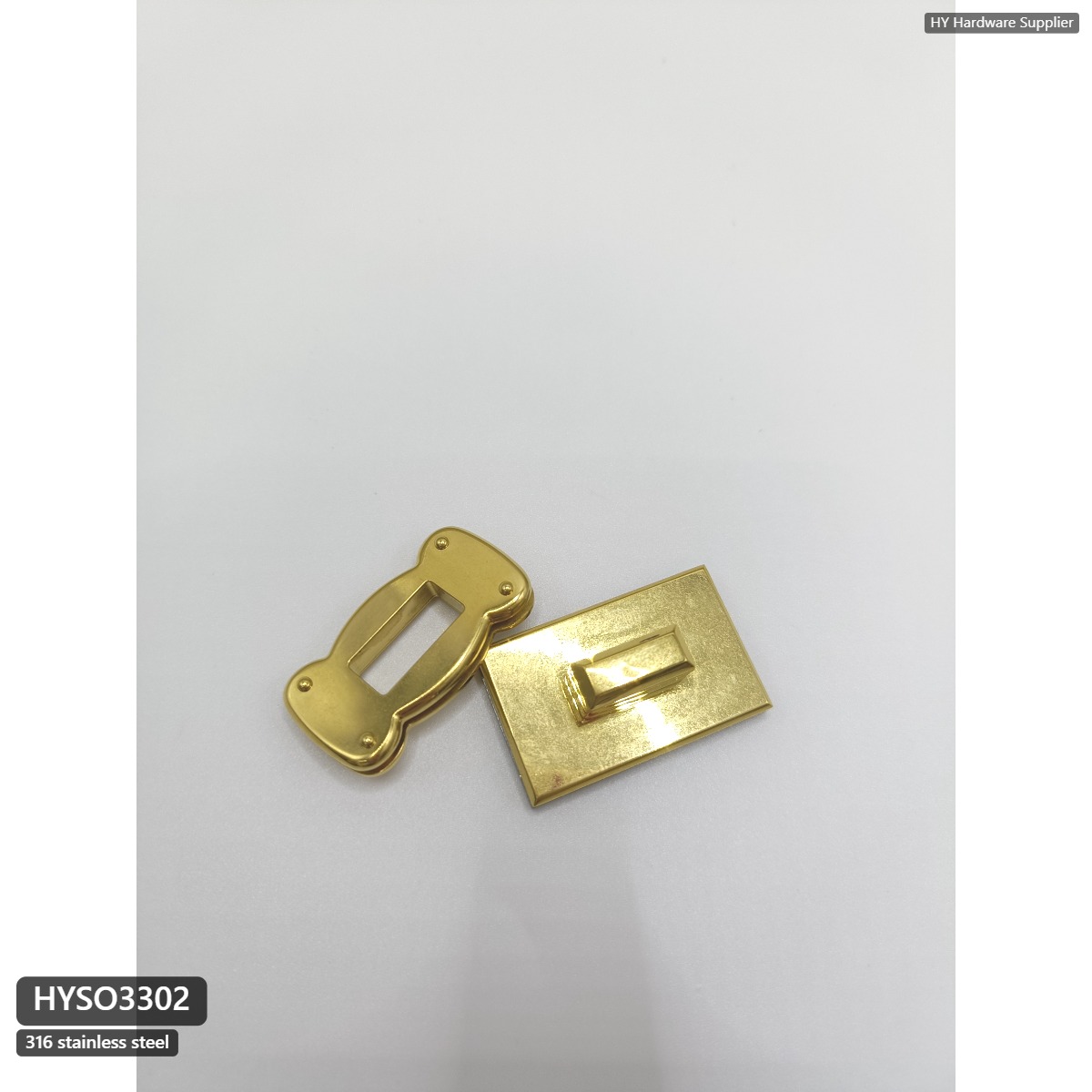 316L Stainless Steel Turn Lock
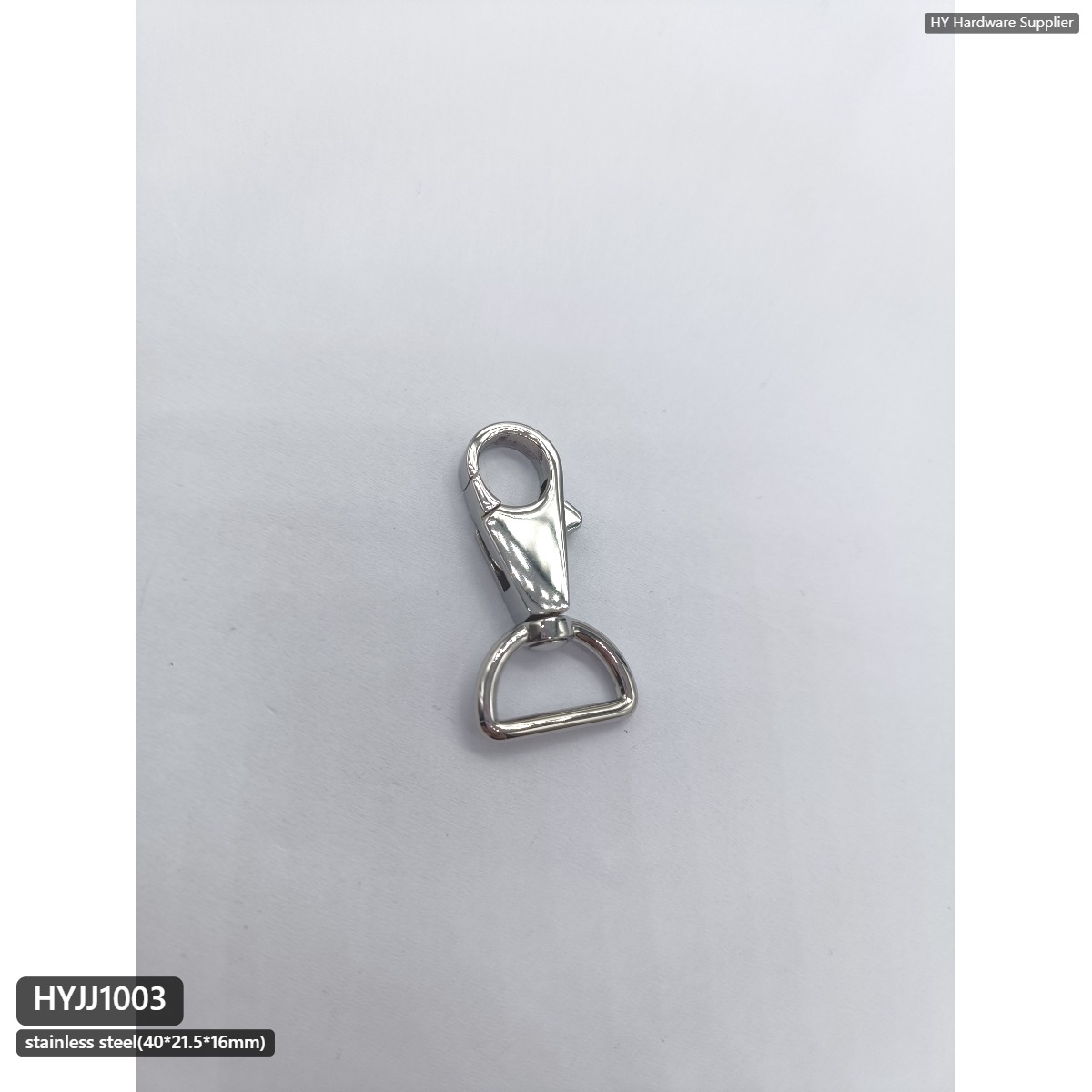 316L Stainless Steel Spring Hook for Bag
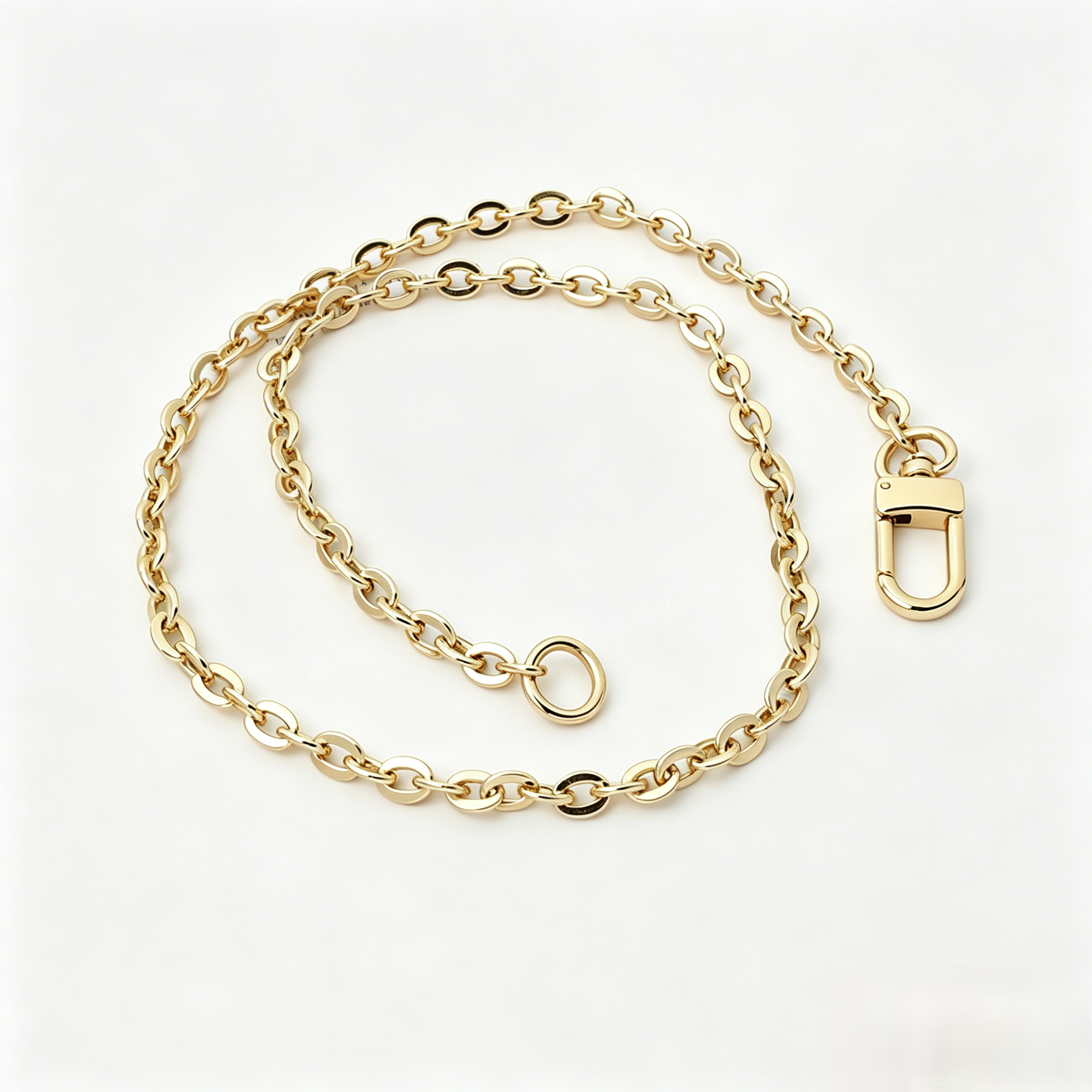 316L Stainless Steel Lady Bag Chain – PVD (Style 2)
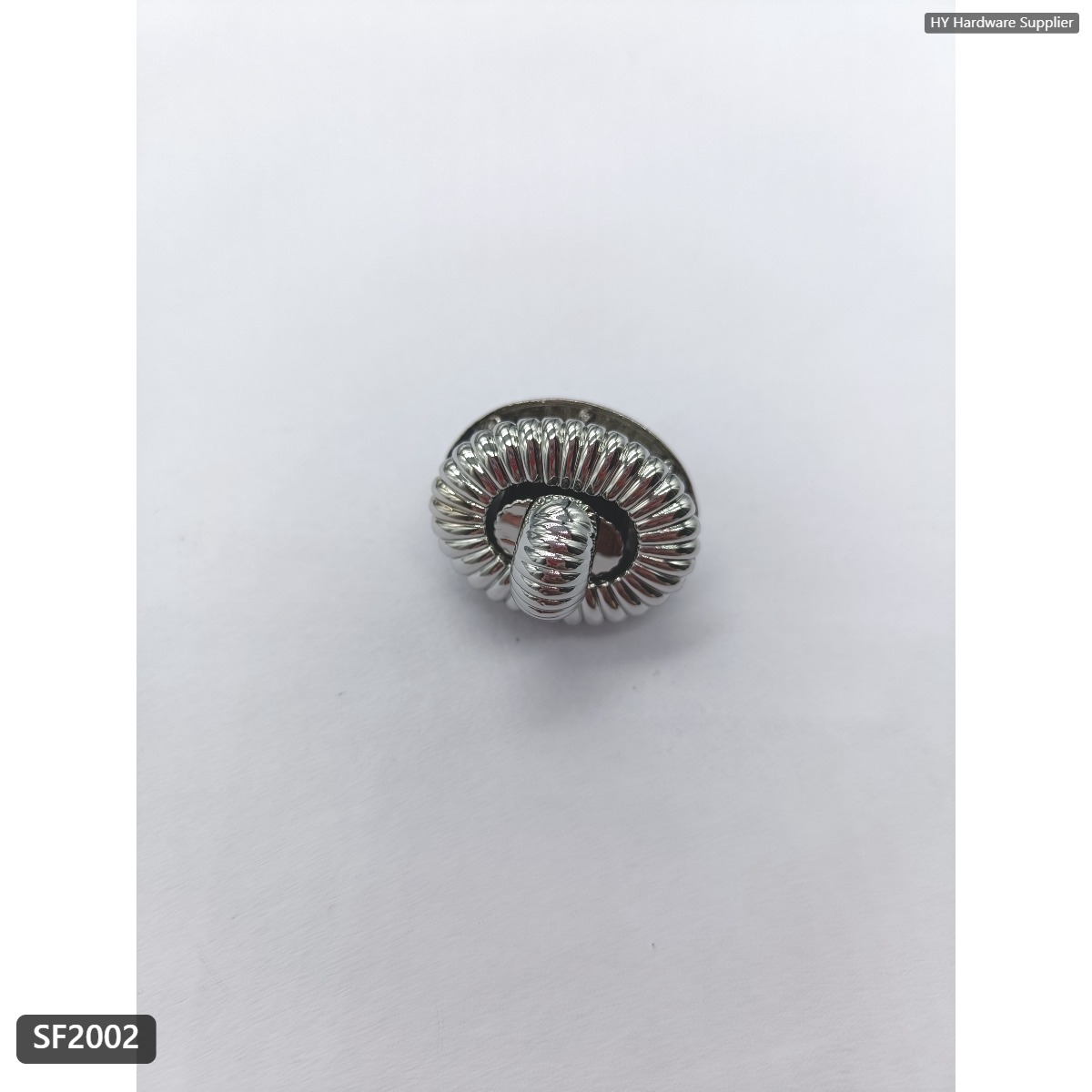 Zinc Alloy Lady Bag Turn Lock – Nickel
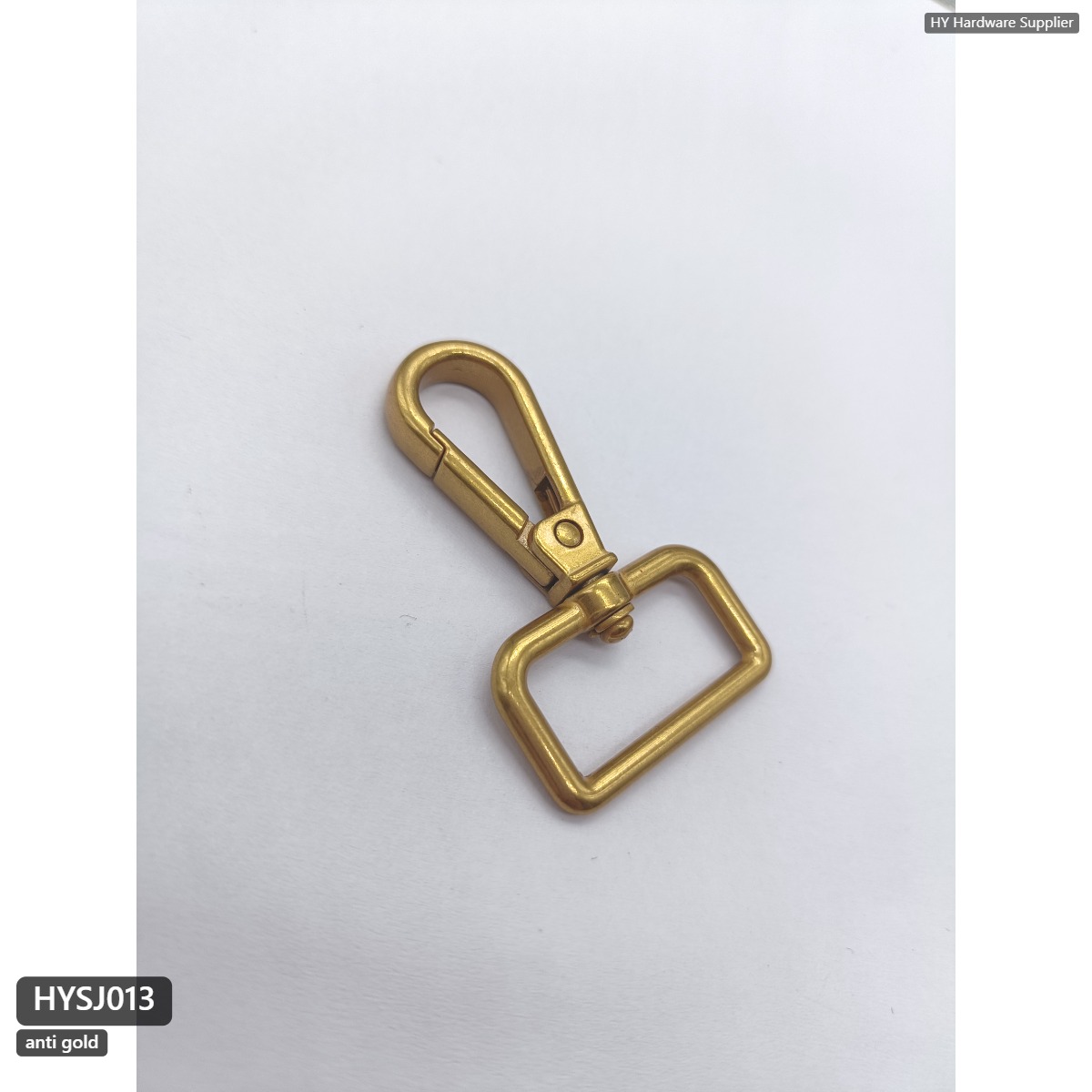 Zinc Alloy Bag Spring Hook
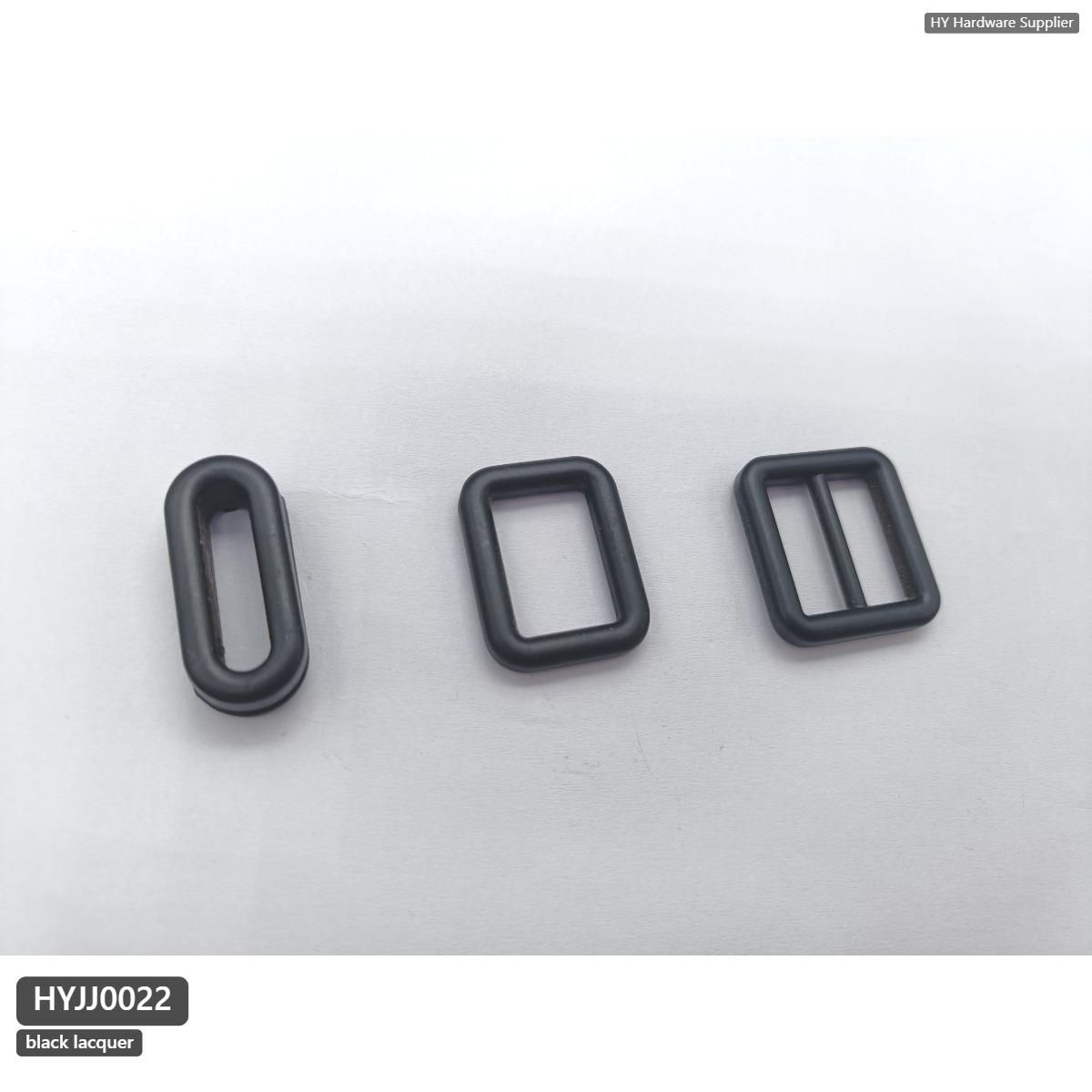 Zinc Alloy D-Ring Set
Sourcing hardware that will not tarnish?
We manufacture 316L stainless steel bag hardware and belt buckles with 18K and 24K gold PVD, in mirror, satin and vintage finishes. Send us your drawings or a reference sample and we will advise on material, finish and tooling — and send you free samples.
Frequently Asked Questions
Why does handbag hardware turn green?
Green discolouration, known as verdigris, is a copper reaction. It happens when the plating on brass or copper-based hardware wears through and the copper in the base metal reacts with moisture, sweat, salt and cosmetics. It is a base-metal problem, not a plating problem. Hardware made from 316L stainless steel contains no copper and cannot form verdigris.
Which metal is best for handbag hardware that will not tarnish?
316L stainless steel. It contains chromium, which forms a self-repairing passive layer, and no copper, so it cannot develop verdigris. Brass looks warm and premium but is copper-based and will patina. Zinc alloy is economical and moulds into complex shapes, but relies entirely on its plating for protection.
Does gold PVD coating on stainless steel wear off?
PVD is a vacuum-deposited coating that bonds at the molecular level, rather than a plating layer sitting on the surface. Under normal use it holds its colour for over five years. Because the substrate underneath is stainless steel rather than brass, even localised wear does not expose a metal that turns green.
What plating thickness should I ask my hardware supplier for?
For plated brass or zinc alloy, ask for the plating thickness in microns and for rack plating rather than barrel plating on visible components. Thin barrel plating is a common cause of early tarnishing. On stainless steel the substrate itself is corrosion-resistant, so plating thickness is a question of appearance rather than protection.
Is stainless steel hardware suitable for the EU market?
316L is the same grade widely used in body jewellery precisely because of its low nickel release. It is well suited to skin-contact components such as chain straps, zip pulls and clasps. Ask your supplier for nickel-release test results against the EU REACH limit for the specific finish you are buying.
Is stainless steel hardware more expensive than brass or zinc alloy?
The unit price is higher and it is harder to machine, so it suits structural and visible pieces rather than every component. The comparison that matters is lifetime cost: hardware failure and tarnishing are among the most common reasons for returns, and a return costs far more than the hardware itself.