Minimum order quantity is one of the first questions a brand asks when sourcing hardware, and one of the least well understood. MOQ is not just a number — it is a proxy for a supplier's production economics, and knowing how to read it will help you negotiate better, plan more accurately, and avoid the mistakes that inflate your first hardware order beyond what the business can absorb.
What MOQ Actually Covers
MOQ in hardware sourcing refers to the minimum quantity per style, per colour/finish, per order. This distinction matters enormously for designer brands managing a range of SKUs.
If you have four belt buckle designs in three finishes each, that is 12 separate SKUs. At an MOQ of 300 pieces per SKU, you are looking at a minimum opening order of 3,600 pieces — before a single belt has sold.
Experienced sourcing managers plan their hardware range around SKU consolidation: fewer designs, fewer finishes, higher volume per SKU. This approach delivers better unit economics and more manageable inventory.
Why MOQ Exists: The Factory Economics
Hardware suppliers set MOQs for two reasons: production setup costs and plating batch economics.
Setup costs: Every production run requires machine setup, material preparation, and quality checks. These fixed costs are spread across the batch. Below a certain quantity, the setup cost per piece makes the unit price uneconomical for both parties.
Plating batch economics: Electroplating and PVD coating are batch processes. A plating tank has a minimum efficient batch size. Running a tank for 50 pieces costs nearly as much in time and chemistry as running it for 500. This is why finish-level MOQs are typically non-negotiable below a certain floor.
Understanding this helps when negotiating. A supplier who tells you the MOQ is 300 pieces is not being arbitrary — they are telling you where their economics start to work.
Standard MOQs by Material and Product Type
For reference, typical MOQs in the B2B leather hardware market:
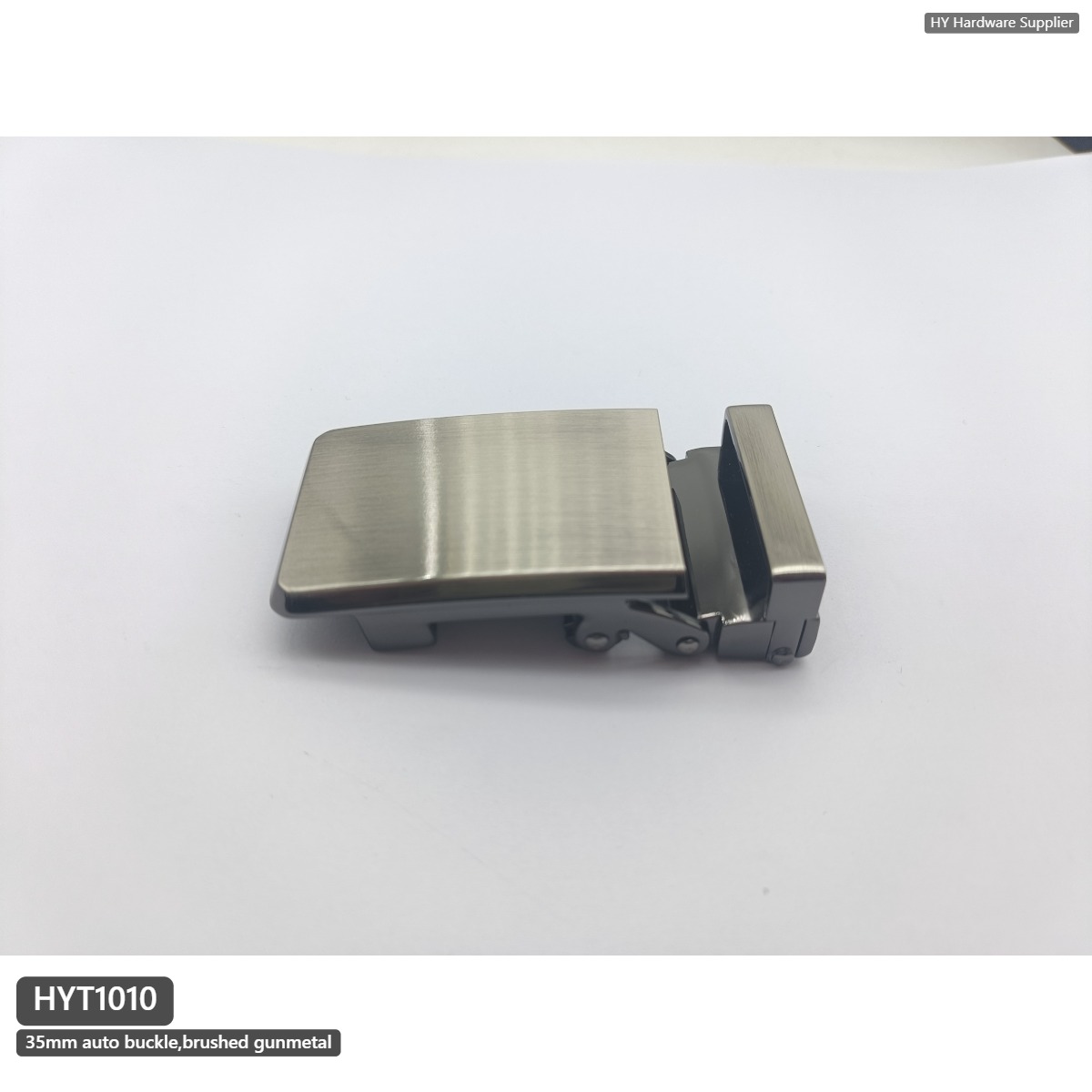
Zinc alloy belt buckles: 300–500 pieces per style per finish.
Zinc alloy bag hardware (D-rings, hooks, locks): 500–1,000 pieces per style per finish.
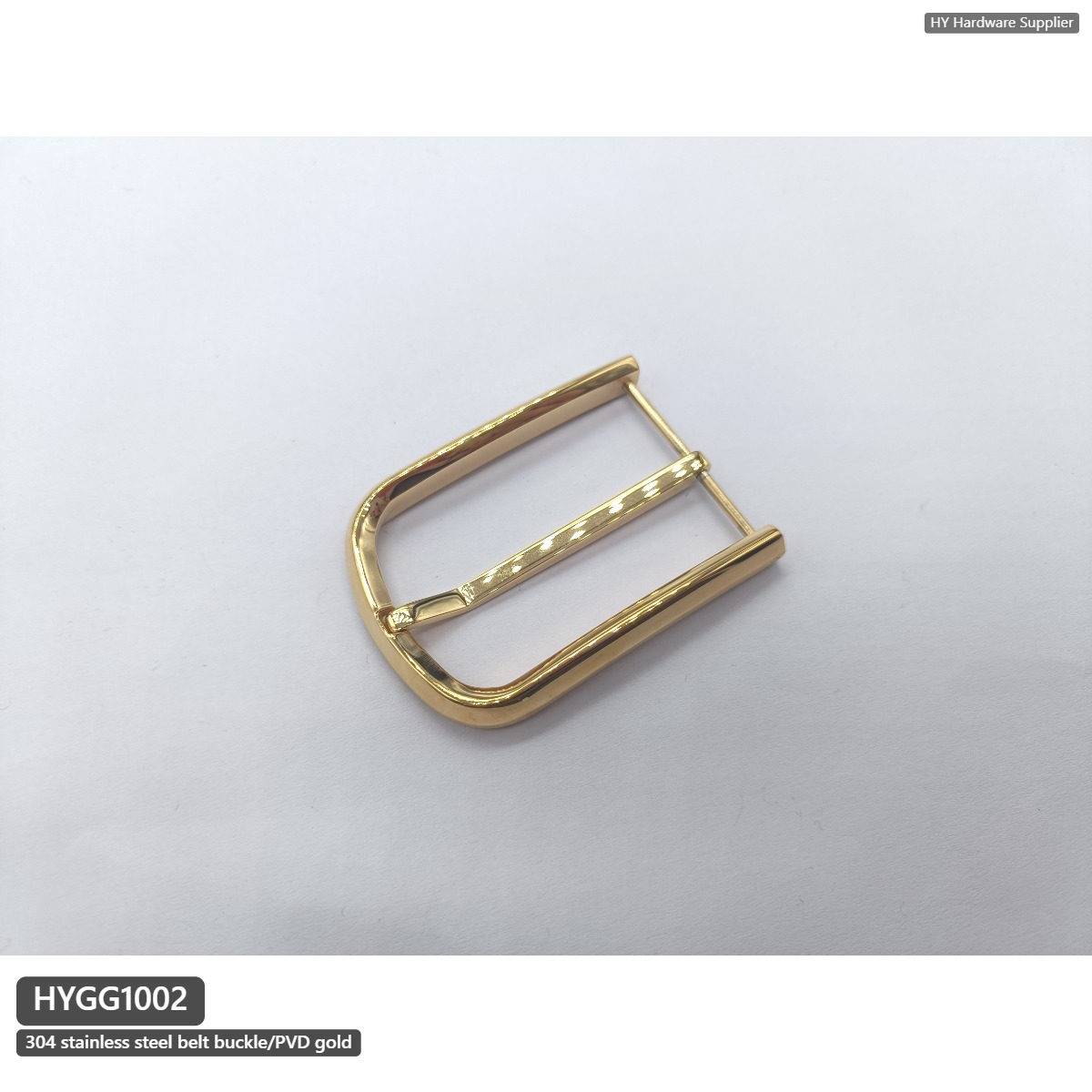
316L stainless steel hardware: 300–500 pieces per style per finish.
Resin/acrylic accessories: 300 pieces per style per colour.
Zippers with custom pullers: 500–1,000 pieces per style.
These are starting points. Suppliers who serve emerging brands often have more flexibility on MOQ for new client relationships, particularly for catalogue styles (standard shapes with custom finish) versus fully custom styles (bespoke molds).
Catalogue vs Custom: The MOQ Difference
This distinction is critical for brands placing their first hardware orders.
Catalogue hardware uses existing molds. There is no tooling cost, and MOQs are typically lower because the factory has the mold ready and can share production runs across multiple clients ordering the same base shape. This is the fastest and most capital-efficient path for a new brand.
Custom hardware requires new mold development, a tooling fee, and a dedicated production run. MOQs are typically higher because the mold investment needs to be amortised across the production volume. The upside is a design that is exclusively yours.
Many brands start with catalogue hardware to establish the supplier relationship and validate the market, then develop custom hardware once they have sales data to support the investment.
What "Low MOQ" Really Means
When a supplier advertises "low MOQ," it is worth probing what exactly is low. Common definitions:
100–200 pieces: genuinely low, typically applies to catalogue styles only. Unit price will be higher. Common in trading companies rather than direct factories.
300–500 pieces: standard low-to-mid MOQ for a factory with dedicated production lines. Suitable for most emerging designer brands at launch.
1,000+ pieces: standard factory MOQ. Appropriate for established brands with confirmed sell-through data.
Also ask: is the MOQ per style, per finish, or per order total? These are very different numbers.
Strategies for Working Within MOQ Constraints
Consolidate your hardware range: design around two or three core hardware pieces that carry across your collection, rather than five unique pieces used on one style each.
Start with catalogue, transition to custom: launch with a supplier's catalogue hardware at lower MOQ, then develop custom pieces once you have a proven seller.
Plan across seasons: if you need 150 pieces per season, ordering 300 and holding inventory for two seasons is often more economical than seeking a supplier who will do 150 at a higher unit price.
Be transparent with your supplier: suppliers who specialise in emerging brands understand growth curves. Share your volume trajectory. A supplier who sees they are building a long-term relationship will often be more flexible on opening order minimums.
Our Approach to MOQ
At HY Hardware Supplier, our standard MOQs start from 300 pieces for zinc alloy and stainless steel hardware. For new brand partnerships and first collections, we assess flexibility on a case-by-case basis — particularly for brands with clear growth plans and strong design direction. Contact us to discuss your specific requirements.